
Quick Summary
- Dull or cloudy patches, especially in walkways, are usually the first visible sign granite needs polishing.
- Fine surface scratches that catch the light are early wear — left alone, they deepen and become harder to remove.
- Etch marks from acidic spills (vinegar, citrus, some cleaning products) show up as dull spots that won’t buff out with regular mopping.
- Malaysia’s humidity can accelerate dirt buildup in granite’s micro-pores if the surface isn’t resealed periodically.
- Uneven shine across the floor, where some patches look glossy and others flat, signals the protective seal has worn through in places.
- Waiting too long turns a straightforward polish into a heavier grinding job, which costs more time and effort to fix.
Granite is one of the most durable natural stones used in Malaysian homes and commercial spaces, but “durable” doesn’t mean “maintenance-free.” Because wear on granite happens gradually, many homeowners only notice a problem once the floor looks noticeably tired by which point a simple buff often isn’t enough. Here’s what to actually look for.
1. The Floor Looks Dull Instead of Reflective
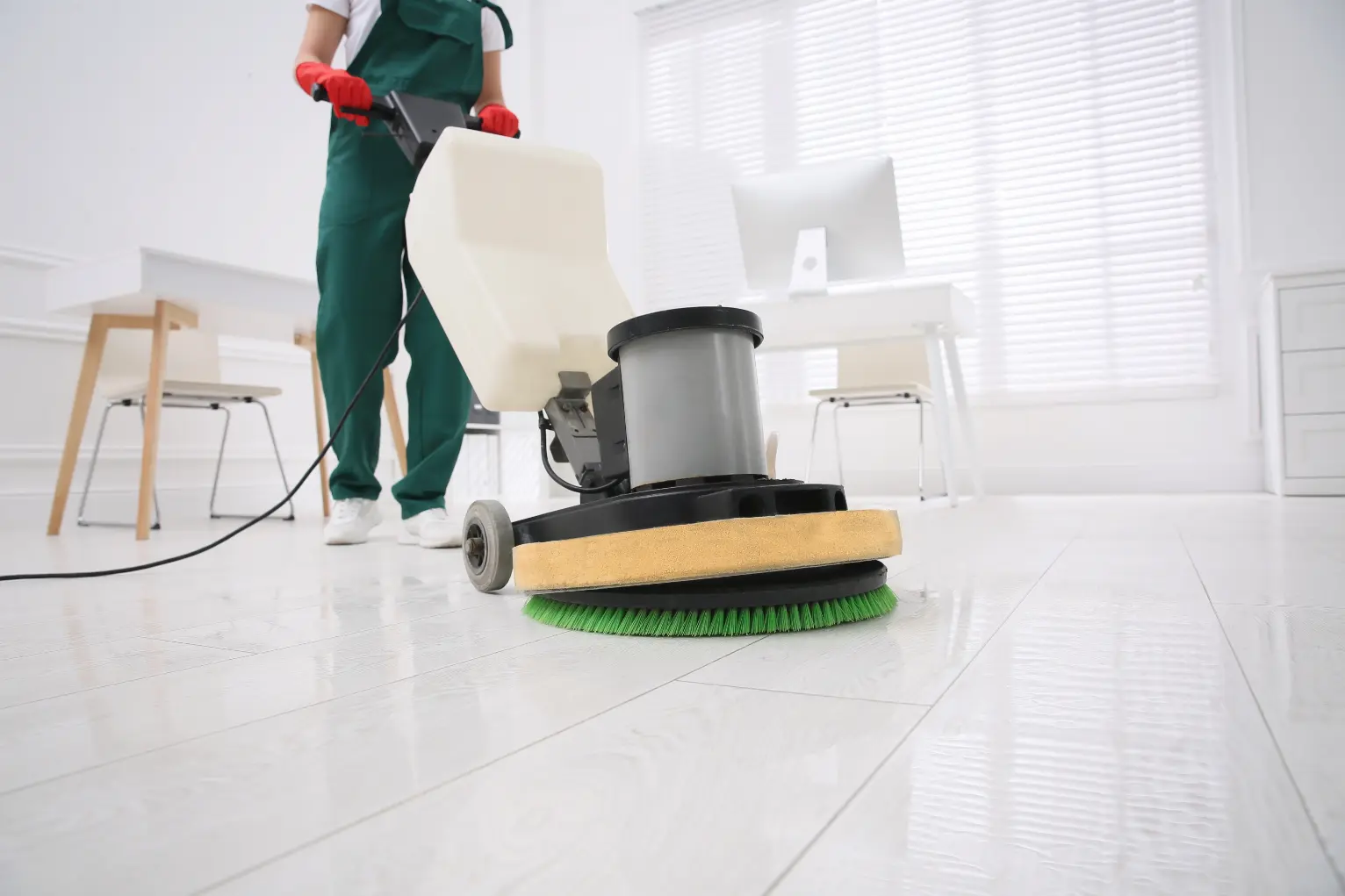
Freshly polished granite has a glassy, reflective surface. When that shine fades to a flat, matte look even after mopping it usually means the top protective layer has worn down from foot traffic, not that the floor is simply “dirty.” Regular cleaning products can’t restore this; it needs mechanical polishing to bring the reflective surface back.
2. Fine Scratches Are Visible When Light Hits the Floor
Stand at one end of the room and look across the floor at a low angle; this is often the easiest way to spot fine scratching that’s invisible from directly above. These hairline marks build up from grit, furniture legs, and daily foot traffic. On their own they’re cosmetic, but left unaddressed they collect dirt and become more visible over time.
3. Etch Marks or Dull Spots From Spills
Granite is more chemical-resistant than marble, but it isn’t immune to etching from acidic spills like vinegar, citrus juice, or certain harsh cleaning products. These show up as small dull or hazy spots that don’t respond to normal cleaning. If you’re noticing a scatter of dull patches near the kitchen or dining area specifically, this is often the cause.
4. Grout Lines Look Worn or Discoloured Faster Than the Tiles
If the grout between granite tiles is looking patchy, stained, or worn well before the granite itself does, it’s worth having both addressed together. Mismatched grout condition is one of the more common reasons a professionally polished floor still looks “off” afterward. Floor Polishing’s floor grouting service is often paired with granite polishing for exactly this reason.
5. Dirt Seems to Build Up Faster Than Before
Granite has natural micro-pores, and Malaysia’s humidity can make dirt and grime settle into them more easily once the surface seal starts to wear thin. If your floor seems to need mopping more frequently just to look presentable, that’s often a sign the sealing not just the polish needs to be redone.
6. Uneven Shine Across the Floor
A floor with patches of glossy shine next to flatter, duller areas usually points to uneven wear from where people walk most, furniture sits, or sunlight hits directly. This unevenness is hard to fix with spot-cleaning and generally needs a full re-polish to even out the finish across the whole floor.
7. It’s Been More Than 1-2 Years Since the Last Professional Polish
Even granite floors that still look reasonably good benefit from periodic professional attention. Waiting until damage is visible often means more aggressive grinding is needed to fix it, compared to a lighter maintenance polish done on a regular schedule.
What Happens If You Wait Too Long
Left unaddressed, these small issues compound. Fine scratches deepen into grooves that trap dirt. Etch marks spread as more spills go unnoticed. Uneven wear patterns become permanent unless corrected with heavier grinding. What could have been a routine maintenance polish turns into a more involved restoration job — which typically takes longer and requires more surface material to be removed to get back to a smooth, even finish.
Getting Your Granite Floor Assessed
The signs above are a useful starting checklist, but the most reliable way to know exactly what your granite floor needs is a professional inspection. A technician can tell the difference between surface-level dullness that a light buff will fix and deeper wear that needs grinding and resealing something that’s genuinely hard to judge accurately just by looking.
Floor Polishing’s granite floor polishing service follows a full inspection-cleaning-grinding-polishing-sealing process, so the fix actually matches the floor’s real condition rather than guessing.
If you’ve spotted two or more of the signs above, it’s a good time to book an inspection rather than wait for the floor to get worse. Contact Floor Polishing for a professional assessment of your granite floor today.
Frequently Asked Questions
1. How do I know if my granite floor needs polishing or just cleaning?
If regular mopping no longer restores the shine, or you notice dullness, scratches, or etch marks that don’t wipe away, that’s usually a sign the floor needs professional polishing rather than routine cleaning.
2. Can scratches on granite floors be fully removed?
Most surface-level scratches can be removed through professional grinding and polishing. Very deep scratches may need more intensive restoration to fully disappear.
3. How often should granite floors be professionally polished in Malaysia?
Most homes benefit from a professional polish and reseal every 1 to 2 years, though this can vary based on foot traffic and how well the floor is maintained day to day.
4. Does granite need sealing as well as polishing?
Yes. Polishing restores the shine, while sealing protects the surface from moisture and staining, which is especially important given Malaysia’s humidity.
5. Is dullness always a sign of worn-out granite, or can it be dirt?
It can be either. Surface dirt usually comes off with proper cleaning, while dullness that remains after cleaning typically points to worn sealant or scratching that needs professional polishing.